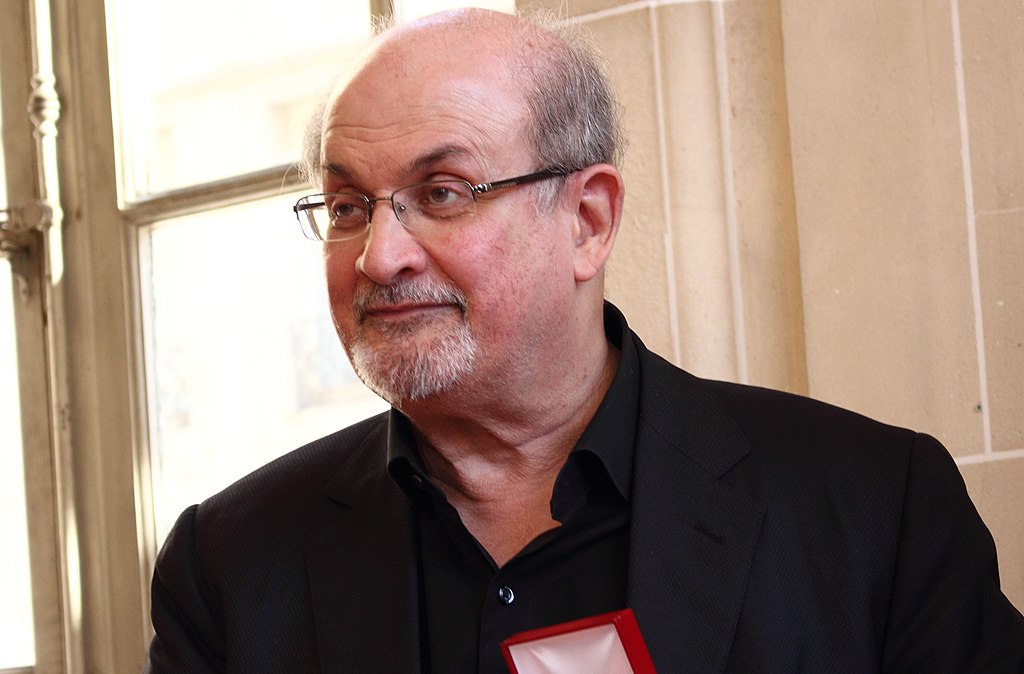
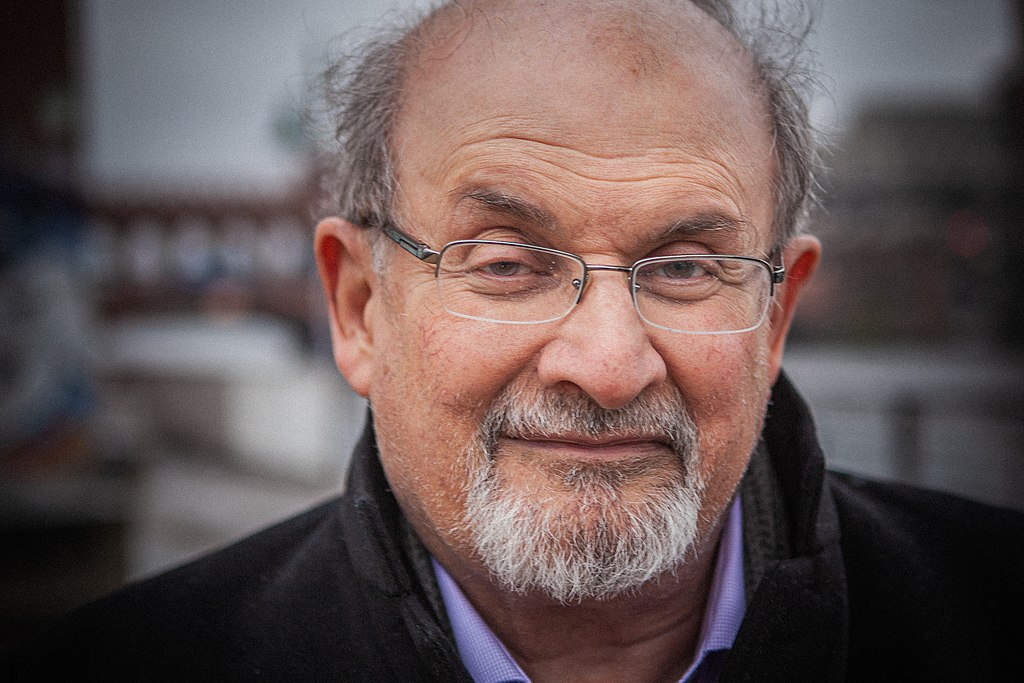
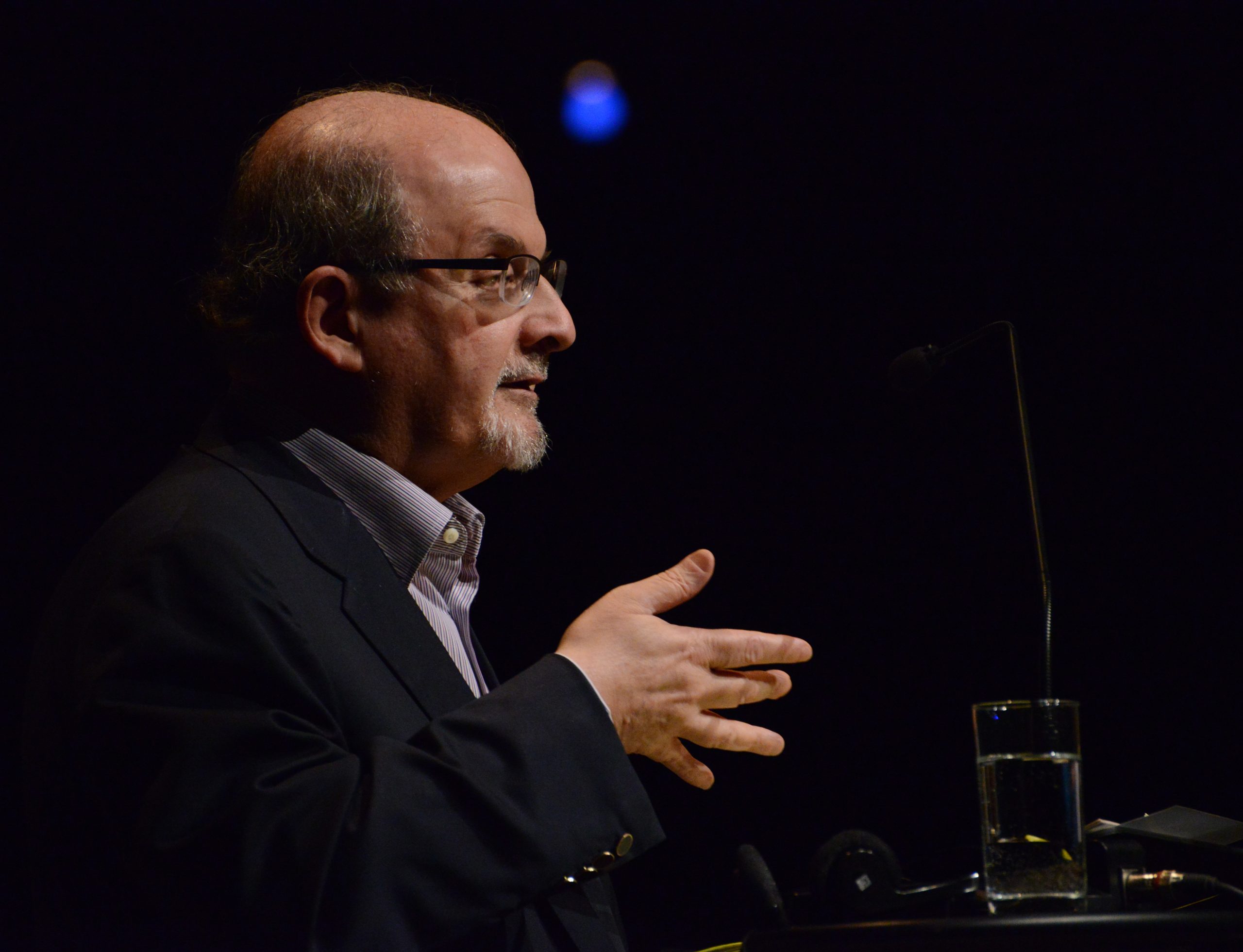
On 12 August 2022, Salman Rushdie, the author of the book The Satanic Verses, was attacked as he prepared to give a lecture at the Chautauqua Institution, an arts and education centre in New York state. He was stabbed in the neck, face and abdomen and remains in a critical condition in hospital. His family issued a statement saying that despite his “life-changing injuries” being severe, “his usual feisty and defiant sense of humour remains intact”.
Index on Censorship has long been a supporter of Salman Rushdie and fully support his right to freedom of expression, as we do for other authors and artists. Supporting those who are silenced, threatened and attacked is at the heart of Index’s 50-year-long history. Index condemns this cowardly attack on the author.Index CEO Ruth Smeeth said, “We are still in shock after the brutal attack on Salman Rushdie last week. While we are relieved to hear he survived, we know the path to recovery will be long and our thoughts go out to him and his family. We consider Salman part of the Index community. We were instrumental in the campaign against the fatwa and Salman has in turn written regularly for our magazine. He is a fierce defender of free expression and his writing, which is beloved by so many, is a testament to the power of words themselves.”
She added, “The violence committed against him is an awful reminder that the fight for freedom of expression continues and we are as committed as ever to campaigning for a world in which acts such as these never happen.
Your messages of support
m1
Censorship is unacceptable at the best of times, but censorship by bullying, threats, physical violence and murder is an abomination. It is the resort of those who are insecure and intellectually immature.
The attack on Salman Rushdie is an unforgivable example of what, if not resisted everywhere and always, would radically impoverish the world by silencing its art, thought and literature.
The closed-minded seek not only to impose censorship but to frighten those who think differently from them into self-censorship. They must be resisted. Rushdie is on the front lines of this struggle: we owe him our gratitude and unequivocal support.
A C Grayling, London
m2
Hang in there dear Salman. Not only ‘because you’re worth it’, but to shame and defeat these murderous bastards.
Judith Vidal-Hall, London
m3
I used to run one of the most prestigious visiting writers series in the country. Of all the famous, unfamous, and infamous writers we had at our campus, Mr. Rushdie was by far the most gracious and generous regarding time spent with students. He made a lasting impression on me as well as all of my students. Hang in there, Mr. Rushdie. We are pulling for you.
Norman Minnick, Indianapolis
m1
I condemn this brutal and primitive attack on humanity and freedom of artistic expression. I wish Salman Rushdie a speedy recovery.
Ersan Pekin, Ankara
m2
One appropriate response to this act of horrific philistinism will be the publication of your next novel. I look forward for to buying my copy on the day of its release.
Michael Collins, London
m3
I stand with Salman Rushdie and completely support his right to freedom of expression. My thoughts and prayers go out to him and all who love him. May we all follow his example and speak our hearts and minds.
Vicki Robinson, Chester
m1
I am in awe of your immense courage, which has been an inspiration to so many people for over thirty-three years. Best wishes for a complete recovery!
Lenny Cavallaro, Methuen, MA
m2
Hang in there dear Salman. Not only ‘because you’re worth it’, but to shame and defeat these murderous bastards.
Judith Vidal-Hall, London
m3
Many more years of brilliant writing and inspirational living.
John Glaves-Smith, Stoke-on-Trent
m1
Wishing you a speedy recovery Mr. Rushdie. You are in our thoughts.
Siobhán Casey, Ireland
m2
Debate is an essential part of civil society. In the words of Audre Lorde, ‘your silence will not protect you.’ Get well soon.
Jess Silverstone, London
m3
The right of writers, poets and artists, above all, to express themselves freely is the precious bedrock of a free and open society. Threaten or remove this right, as have so many countries around the world, and you condemn their people to lives of fear, deceit and unhappiness, governed by tyranny and corruption. The weakest people in such societies suffer the most. We must speak up now, and always, for them and challenge intolerance even when it is difficult and dangerous to do so. I support Salman Rushdie's freedom to write about whatever he wants, and applaud Index's work to ensure anyone's right to speak out without danger to their lives.
Anonymous
m1
Salman Rushdie is a very valuable writer. We love him. He is ostracized by some people because of his thoughts.
Akif Genc, UK
m2
I supported the campaign in 1989 and I believe ever stronger in freedom of expression, including the freedom to offend.
Stephen Goldring, London
m3
There can be no freedom without freedom of expression. Our hearts and prayers are with you. Get well soon Salman!
Kelly Duda, Los Angeles
m1
The attack on Mr. Rushdie is reprehensible and inexcusable, and his assailant needs to be held accountable to the fullest extent of the law and we have to be sure to send a message that these kinds of attacks on the very nature of free speech and expression will not and cannot be tolerated in any capacity. We have to acknowledge that the very fatwa issued by the former Ayatollah Khomeini of Iran (the same responsible for holding the reins of the 1979 Islamic Revolution and the kidnapping and torture of American diplomats and civilians for over 400 days in Tehran at the end of the 1970s) is at the very HEART of this attack on Mr. Rushdie, decades after it was issued! I am an American living in an America where our own ability to express ourselves is under grave assault and the fact that this took place in New York on Mr. Rushdie makes me hang my head for my country. Americans need to wake up and smell the coffee. Godspeed in your recovery, Salman Rushdie.
Dave Beavers, Texas
m2
You will survive this and prove the pen is mightier than the sword Mr Rushdie. My thoughts are with you, your family and friends.
Stephen Hoffman, UK
m3
Salman Rushdie, your stand for free speech and thought will live long beyond the small-minded hate that too often drives or shelters in movements of power... religion, politics and business. Your attackers and detractors put themselves well below you. You shine.
Tony Wilson, Bristol
m1
Thank you for your courage, creativity, and moral clarity. Free speech remains the first, most fundamental freedom. Salman Rushdie has courageously led the struggle for writers to share their work for decades. We can't let the least tolerant, the least creative and the most dogmatic determine what we read and how we live.
Eric Roth, Los Angeles
m2
Get well soon.. true fan from India.
Janki Telivala, India
m3
Absolutely appalling what happened to you. Dark times indeed when freedom of expression is attacked. Without the freedom to think and express ourselves as human beings, every other freedom we have can be taken away. Glad you are recovering. Take care. Solidarity.
Dave Rendle, Cardigan
m1
I'm in the middle of reading Languages of Truth. Keep telling the truth, Mr. Rushdie, in all the languages of the world. Very best wishes for a speedy recovery.
Marjorie, Canada
m2
I passionately hope that you recover from this brutal stabbing. I don't suppose you wanted to become a symbol of freedom of expression, let alone a martyr to it, but that's what you've become. It seems that the fatwa against you has now been extended to allow all writers to be bullied, online and offline, by anyone who wants to be offended. I was particularly shocked to discover that the man who tried to murder you had only read two pages of your work. As a novelist, I feel it's our imaginations that are under attack. Thank you for standing up for all of us.
Miranda Miller, London
m3
Really appalled by the attack on Salman Rushdie. Who feels that they have the right to extinguish the life of another for any man created belief system?
Bryan Hillan, Hertfordshire
m1
Thank you for your dedication, your striving, to embrace the journey of your convictions that have made you you. When I read the news the other day (oh boy), my brain became abuzz with concern that this was yet another screaming trauma our universe was meant to bear? For what? ...Aye exclaiming so is no less rhetorical than exclaiming; what rot! ...Nethertheless, my heart beats better for the news that your energies persevere! Rest in peace and then blaze back into our lives with oil and grease! GA YAU!
Laura, Sweden
m2
Full support for Salman Rushdie and a sincere hope for a speedy and full recovery from a senseless assault and attempted murder.
Granville Williams, editor, MediaNorth
m3
The despicable armed assassin who tried to kill an unarmed man, a great writer, has left all civilised people aghast. I know I speak for all who are in anxiety about Salman Rushdie’s condition in hospital, as we wait to hear that he will make a strong recovery which will enable him to write many more wonderful and courageously outspoken books. Thank you Salman for your ongoing defence of freedom of expression and for the glory you have brought to literature.
Nayantara Sahgal, author, India
m1
Salman, Your courage in living freely and refusing to submit is an example to us all. Your rightly recognised that we cannot, as individuals or a society, be cowed by violent extremism or afford to place religion off limits for critical examination, literature, art or satire. Pandering to fundamentalism is not a road to an open, tolerant or peaceful society. We can't match the terrorist’s fanaticism, but we must match their resolve. Citizens of all faiths and beliefs need to stand side by side and demonstrate that we hold as firmly to our core values and freedoms as they hold to their warped extremist ideologies. No more half-hearted commitments to free speech. No more pandering to offence takers. And no more victim blaming. Let's never lose sight of the fact that the responsibility for violence lies with those who perpetrate it. You once said that the writer's great weapon is the truth and integrity of their voice. The best way we can show solidarity with you is by never allowing that voice to be silenced. Salman, I salute you.
Stephen Evans, London
m2
All the best to you, my hero! I have long admired you for daring to stand up for the freedom of the individual to think their own thoughts at all times - a brave warrior against mindless groupthink and psychological slavery. You are a beacon of light for humanity in these dark days of mandatory homogeneity of thought and enforced conformity. From one warrior against cultism to another - I love and salute you!
Katy Morgan-Davies, Leeds
m3
"to will is to disagree; not to submit; to dissent." - so salman rushdie's the satanic verses speaking of what it is that human beings do - strong liberal democracies facilitate dissent - censorship has no place in democracies - rushdie stood up to those in the uk and usa who pressured him not to publish a paperback edition of the offending book - we should celebrate him for that act of dissent - thank him for enriching our lives - and take courage from his example when defending freedom of expression - we owe salman rushdie a great deal -
Jonathan Dronsfield, London
m1
Thank you for being you, Mr. Rushdie. You've been an asset to the world in general and my students in particular. Hang in there!
Maurice Austin
m2
Never give in and never give up - the freedom of mind and expression must not lose to narrow-minded hate and intolerance.
Torsten Westh, Denmark
m3
Language is courage, you wrote. The ability to conceive a thought, to speak it, and by doing so to make it true. So I think, write and declare my truths: thank you for your books and essays and courage, get well soon.
Maria Timiaan, Middelburg, The Netherlands
m1
Dear Salman I hope you have good company while you recover. Someone to share a joke with. Someone who’ll take on those tasks that you just need doing. Someone to bring you just the right cup of tea. Someone who’ll save quirky stories from the news to read to you. Someone who’ll pick up their phone anytime just to comfort you with their voice. I am thinking of you and wishing you a steady recovery. May your heart continue to beat strong and your imagination roam free, even while your body rests and heals. With kind regards
Nicola Spurr, London
m2
Dear Mr. Rushdie, I am sending you this wish for your rapid recovery. I read the Satanic Verses because it had been banned and a fatwa put on your head. What I found was a good piece of writing, good enough that I have continued to read most of your other literature. I was especially impressed with the sensitivity and insight you showed in Shalomar the Clown, and as a comment on the follies of theocratic idealism. I hope to read more of your work in the future. You have shown a particular courage with the continuation of your work which is inspiring to all. Do get well, and go in peace.
Mike Van Note, USA
m3
Mr. Rushdie, I am praying for your recovery. People of good will around the world support you and your fundamental human right to speak and write freely, expressing your opinions and beliefs without fear. Your gift for writing is admired by many, and we all hope you will be well enough to speak and write again very soon. I Stand With Salman
Darla Bedford Moe, Sacramento
m1
The best way to show support for and solidarity with Salman Rushdie is to buy his books.
Britta Böhler, Cologne
m2
Sending loving and healing thoughts to you as a member of PEN. You are a wonderful, inspiring writer and a hero of free expression. May you have a full and complete recovery, with the best possible medical outcome. Love and solidarity to you from a reader of your great novels and essays
Marion Lipshutz, Poughkeepsie
m3
The reprehensible attack on Sir Salman Rushdie is not only an act of cowardice but also smacks of intolerance of the right to speech. The assailant knifed him while he was engaged in an act as peaceful as speaking in full view of a dumbstruck audience. Wish Sir Salman a speedy recovery, a long life and years of wonderful literature that only he can keep giving his readers.
Prabuddha Chaudhuri, Kolkata
m1
Dear Salman, I am sending so much love to you. Through your luminous work, your wisdom, humour and courage shines. You have given me the courage to follow my passion and to write my first book at 52. I am so grateful to you for the inspiration you have given to me over the years. I applaud you for sharing your gifts with the world and for facing all that you have faced. Humanity needs you now more than ever as a greatly revered elder. May your recovery be gentle, swift and all encompassing. May compassion uplift your spirit as you continue to step beyond fear, with ease, love and softness as your tireless companions. With all my love and respect
Sally Birch, Australia
m2
I was horrified by the attack on your life. I hope you will recover and will be able to produce some more great works of literature. Two particular reactions I saw on TV struck me. One was on Dateline London in which all guests said to be saddened about the attack, but rejected your criticism on the Prophet. I was shocked. Another was on the German TV, in a show Literarische Quartet , a show in which four critics review recently published novels. Because of what happened to you The Satanic Verses were reviewed. All critics - one was a Muslim btw - praised it as a great work of fiction.
Dirk De Pril, Belgium
m3
I condemn this brutal attack on humanity and freedom of speech.
Farzad Maghami, Melbourne
m1
From Midnight's Children to Satanic Verses to Haroun and the Sea of Stories and beyond, your imagination, humour, and mouth-watering use of language have enriched my life. Be well.
Raymond Modiz, Switzerland
m2
My heart broke when I learned that you were attacked. Wishing you a speedy recovery and that you know how loved and respected you are.
Joelle Johnson, Calgary
m3
May the literary establishment take inspiration from your courage and defend free speech against all its enemies.
Ruth Dudley Edwards, London
m1
My best wishes to Salman, a great voice for freedom, after this truly shocking incident. The world is going nuts, but hopefully these few words help to convince there also still are a lot of people that do believe in Salman and his message. And love and reason will prevail at the end. Thanks for your courage in this battle. Best of luck and a speedy recovery, my dear man.
Roel Knol, Leiden
m2
It is brave ex-Muslims, such as yourself, who are the hope of the world. Your example inspires all of us in the anti-Islamist movement, and the attack on you will only stiffen our opposition. I am ashamed that the attack on you occurred on American soil. I know you are an atheist but I will be praying for your safety, health and happiness.
Michael Jurgens, Colorado
[/vc_column_text][vc_cta h2=”Support our work with other authors who face being silenced” h2_font_container=”tag:h2|text_align:left” txt_align=”center” color=”black” add_button=”bottom” btn_title=”Make a donation today” btn_color=”inverse” btn_size=”lg” use_custom_fonts_h2=”true” btn_link=”url:https%3A%2F%2Fwww.peoplesfundraising.com%2Fdonation%2Findex-on-censorship|title:Support%20Index%2C%20Donate%20Now”][/vc_cta][/vc_column][/vc_row][vc_row][vc_column][vc_column_text]
Share your message
We call on all others who believe in his right not to be silenced to leave a message of support, using the form below, which we will share with him and publish here. You can also sign up to receive our weekly newsletter to receive updates on the campaign. It also features news relating to freedom of expression issues around the world. You do not need to sign up to this to send a message of support.
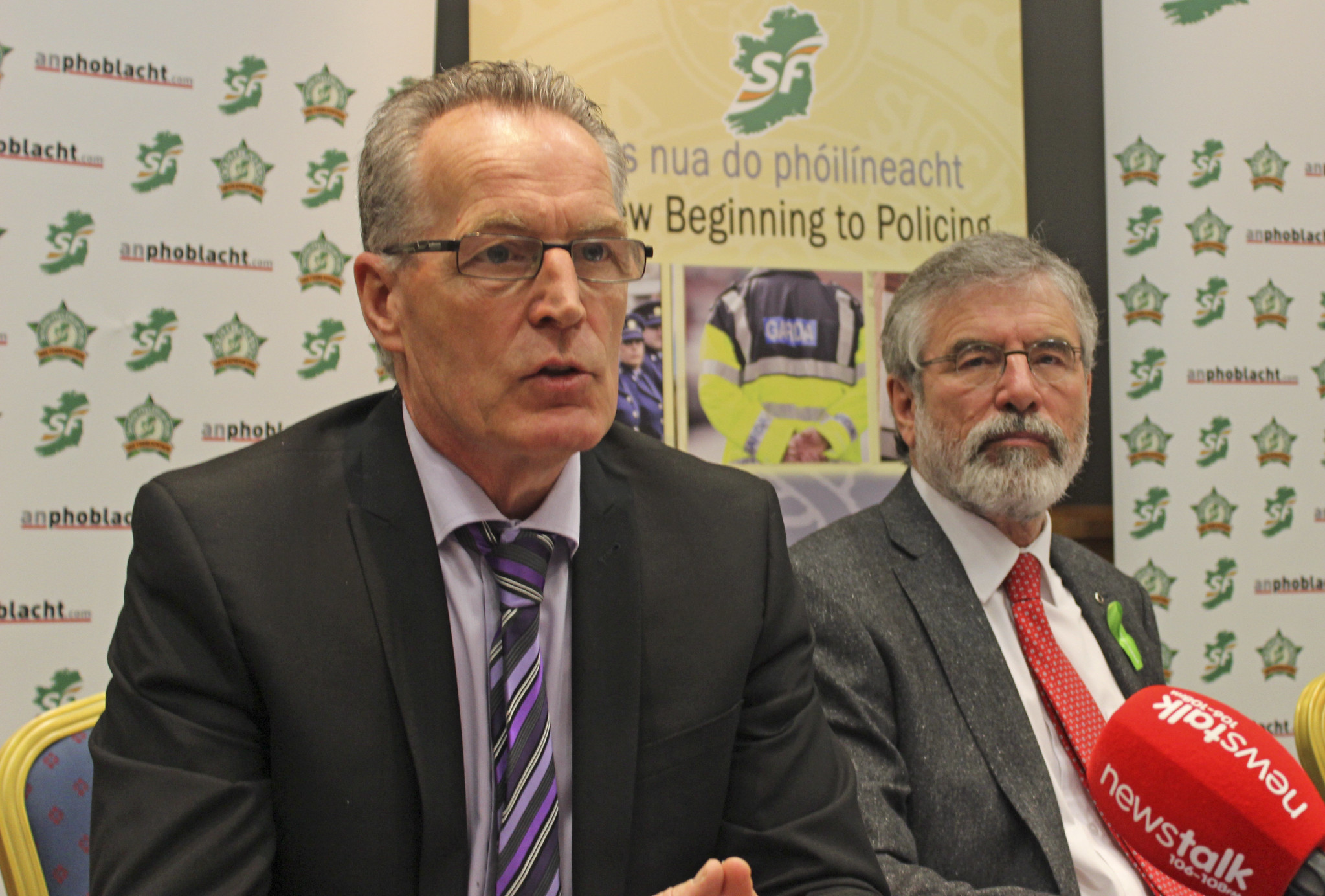
Gerry Kelly MLA & Gerry Adams TD. Photo: Sinn Fein, CC BY 2.0
Index on Censorship is concerned at the lawsuits that have been filed against journalist Malachi O’Doherty and columnist Ruth Dudley Edwards. Both are being sued individually by Sinn Féin politician Gerry Kelly MLA, who is claiming aggravated damages for comments they each made – on radio and in print respectively – in relation to Kelly’s role in 1983 Maze Prison escape.
“Everyone has the right to defend their good name but as elected representatives, politicians have a duty to display a greater degree of restraint when it comes to taking to legal action against journalists. This is especially true when the contested statements are related to matters of public interest. Lawsuits against journalists can have a serious and damaging impact on media freedom and on our democracy,” said Jessica Ní Mhainín, Policy and Campaigns Manager at Index on Censorship.
Explaining Index on Censorship’s decision to file a media freedom alert to the Council of Europe Platform, Ní Mhainín said: “We are concerned that these lawsuits in particular have several characteristics of strategic lawsuits against public participation or ‘SLAPPs’. SLAPPs involve powerful people – such as politicians – making legal threats or taking legal actions against public watchdogs – such as journalists – in response to public interest speech.”
This is the seventh media freedom alert filed on the United Kingdom to the Council of Europe Platform to Promote the Protection of Journalism and Safety of Journalists this year and the third relating to SLAPPs.
In the name of counter-terrorism, police raided the houses of journalists in Diyarbakır, in the Kurdish region of Turkey, on 8 June. They took into custody 19 journalists, two media employees and one citizen, who had given an interview to a journalist. Two criminal investigations were announced to target “the Press Structure of the Kurdish Workers Party (PKK) and Kurdistan Communities Union (KCK)”.
Journalists who work in eastern Turkey face tremendous pressures as they are almost always the ones who expose rights violations by the state in a conflict between Turkish authorities and Kurdish groups, which has been going on since the early 1980s. The PKK has called for more rights for Kurdish people, and the armed conflict has cost over 40,000 lives. Turkey considers the PKK a terrorist organisation, as do the EU and US.
In addition to the journalists’ houses, police raided the offices of three production companies and the women’s news agency Jin News in an unlawful manner. The search conducted at the Jin News agency was carried out without any representative of the agency being notified or present. The police are yet to provide a record of what has been confiscated.
After being extended twice, the custody period eventually amounted to eight days. In her indictment-like extension petitions, the prosecutor directly accused the journalists without presenting any evidence. Furthermore, she justified the extensions by saying the confiscated material needed extensive examination. According to the lawyers, however, this long custody period served the manufacturing of new evidence.
The interrogation of the journalists began on 15 June at around 9am. The prosecutor questioned the journalists about their professional activities. She asked why they worked at their respective media outlets, why they produced particular programmes or news articles, and why they used specific expressions.
While neither the lawyers nor the journalists were granted access to the investigation file – which violated their right to defence – investigation details were leaked to media organisations close to the government. According to these news reports, journalists are accused of “operating as the PKK and KCK Press Structure.”
After an interrogation lasting nearly 20 hours, the prosecutor referred 18 journalists, two media employees and one citizen to the Diyarbakır 1st Criminal Judgeship of Peace and requested their arrest on suspicion of “membership of a terrorist organisation”. Within 15 minutes, the judge ruled to arrest 16 of the journalists. In the decisions, the judge did not refer to any concrete evidence other than the testimonies of defectors from the PKK who claimed that the journalists produced content for Sterk TV, Medya Haber TV, Jin TV and Rohani TV – all of which are considered as PKK outlets by Turkish authorities. The judge released four journalists, one media employee and the sole citizen from custody, along with judicial control measures.
This is not an isolated incident. A recent example is when five journalists reported on two villagers who were tortured and thrown out of a helicopter by security forces in Van, also in eastern Turkey. Four of them were held in pre-trial detention for six months until the first hearing. Accompanied with discrediting campaigns on social and mainstream media, these journalists were tried under terrorism charges and were eventually acquitted. Acquitted or not, this recent operation is the largest of its kind targeting the Kurdish press in recent years. It is reminiscent of the infamous “KCK Press Trials”, in which 46 journalists and media employees have been standing trial for the past 10 years.
This latest operation targeting Kurdish journalists signals that the government is once again flexing its muscles to silence journalists in the region ahead of the upcoming elections next year.
The 16 arrested journalists:
Lezgin Akdeniz: Camera operator, TV show producer
Safiye Alagaş: Jin News Director
Serdar Altan: Freelance journalist, Dicle Fırat Journalists’ Association (DFG) Co-chair
Zeynel Abidin Bulut: Xwebûn editor, DFG executive
Ömer Çelik: TV show host, former Mesopotamia News Agency editor
Suat Doğuhan: Camera operator, Pel Production owner
Mehmet Ali Ertaş: Xwebûn Editor-in-chief
Ramazan Geciken: Pel Production camera operator
Mazlum Doğan Güler: Piya Production camera operator
İbrahim Koyuncu: Camera operator, video editor
Abdurrahman Öncü: Pel Production camera operator
Aziz Oruç: Mesopotamia News Agency editor
Mehmet Şahin: Xwebûn columnist, teacher
Neşe Toprak: Pel Production TV show producer
Elif Üngür: Piya Production TV show host
Remziye Temel: Piya Production accountant
The free press in Belarus is under threat like never before in the wake of the disputed re-election of Aleksandr Lukanshenka in August 2020, with journalists being threatened, fined, arrested and tortured for speaking out against the country’s ruler. Indeed, former Index employee and contributor Andrei Aliksandrau remains in prison, facing a sentence of up to 15 years for alleged “high treason”.
A year after the elections, the Belarusian authorities went a step further in clamping down on media freedom, banning the country’s journalism body, the Belarusian Association of Journalists.
Index spoke with BAJ chair Andrei Bastunets in the wake of the award, talking about the worsening situation for independent media and how BAJ continues to support press freedom.
Is it still possible to work as an independent journalist in Belarus following the start of the war in Ukraine?
“The key problems for Belarusian independent journalists arose before the war in Ukraine, and even before the 2020 presidential election. But after the elections – and journalists’ coverage of post-election protests – the pressure on the media, journalists and bloggers has increased dramatically (although earlier Belarus had bad ranking positions in international free speech ratings and indexes too). In 2021, many journalists and even entire editorial offices were forced to flee the country in order to avoid criminal prosecution by the Belarusian authorities and to be able to continue their professional activities.”
“A lot of Belarusian journalists – more than 100 – who were forced to leave their country chose Ukraine as a place of refuge. But after the start of the Kremlin’s war against this country, they had to leave their homes and belongings again and move to other countries. Journalists and bloggers who continue to work in Belarus face additional persecution for expressing their anti-war position. However they spread truthful information on what is happening. Last week, Baranavichy-based journalist Yury Hantsarevich was detained and accused of passing on information about Russian troop transfers in Belarus.”
How many journalists are still in detention in Belarus?
Andrei Bastunets, chairperson of the Belarusian Association of Journalists
“There are 24 journalists behind bars at the moment. Eight of them are serving their terms in prison, and the rest are in custody pending trial. All are deemed political prisoners by Belarusian human rights organisations.”
“In the first four months of 2022, five sentences were handed down against journalists in criminal cases – from 1.3 to 2.5 years in prison. The maximum punishment for a journalist has been a 15-year strict regime sentence for blogger Ihar Losik, who was a consultant for the Belarusian service of Radio Liberty.”
“My friend and former Index staff member Andrei Aliaksandrau has been in jail since January 2021; and recently the Belarusian Investigative Committee reported on the charges against him under four criminal articles, including Article 356 (high treason) which outlines a punishment of up to 15 years in prison.”
How is the war (or special military operation as Putin would have it) being reported in Belarus?
“There is a difference in the approaches of state-run and independent media outlets. In the news agenda of the independent media, the war in Ukraine is being called ‘war’ and it is on their front pages. These media outlets are publishing mostly online now because they do not have an opportunity to publish in print after printing houses and state monopoly distribution chains were banned from cooperation with the independent press. The state television and other government-backed media in Belarus are reporting on the war in Ukraine spreading the narratives of the Russian pro-Kremlin media.”
Is the BAJ still operating and is it having to do so from exile?
“In August 2021, the Supreme Court of Belarus ordered the dissolution of the organisation, at the request of the country’s Ministry of Justice. Now, BAJ is not an organisation registered by the Ministry, it is not a formal structure. It is about 1,300 people united in implementing their common idea and their mission – to expand the space of free speech in Belarus. And an official’s resolution has not affected our activities. Most of the organisation’s leadership had to leave the country after a series of police raids and interrogations by investigators, after arrests of our colleagues and friends, but we continue our work from abroad. We treat all media outlets of Belarus, regardless of whether they stayed in the country or moved abroad, as a single Belarus media sector. And we are providing all the necessary and possible support to this media sector.”
How important is the recognition through awards of BAJ, such as the Unesco award recently?
“We regard the UNESCO award as support for the entire independent journalistic community in Belarus. By the way, within literally two days, BAJ received three awards. In addition to UNESCO/Guillermo Cano World Press Freedom Prize, there was the award from the Swedish section of Reporters Without Borders (RSF) and Difference Day Honorary Title for Freedom of Expression from Brussels ULB and VUB universities. They are very important for our organisation as appreciation of our work, but even more as a high assessment of Belarusian journalists’ work in extremely difficult conditions. And, of course, it is important for us that Belarus has returned to the front pages of the international media. Although, we understand indeed that current events in Ukraine are attracting general attention as the state of affairs in the region and of the entire system of world security formed after WWII depend on their development.”